
Muncie’s First Franksgiving
By: Chris Flook
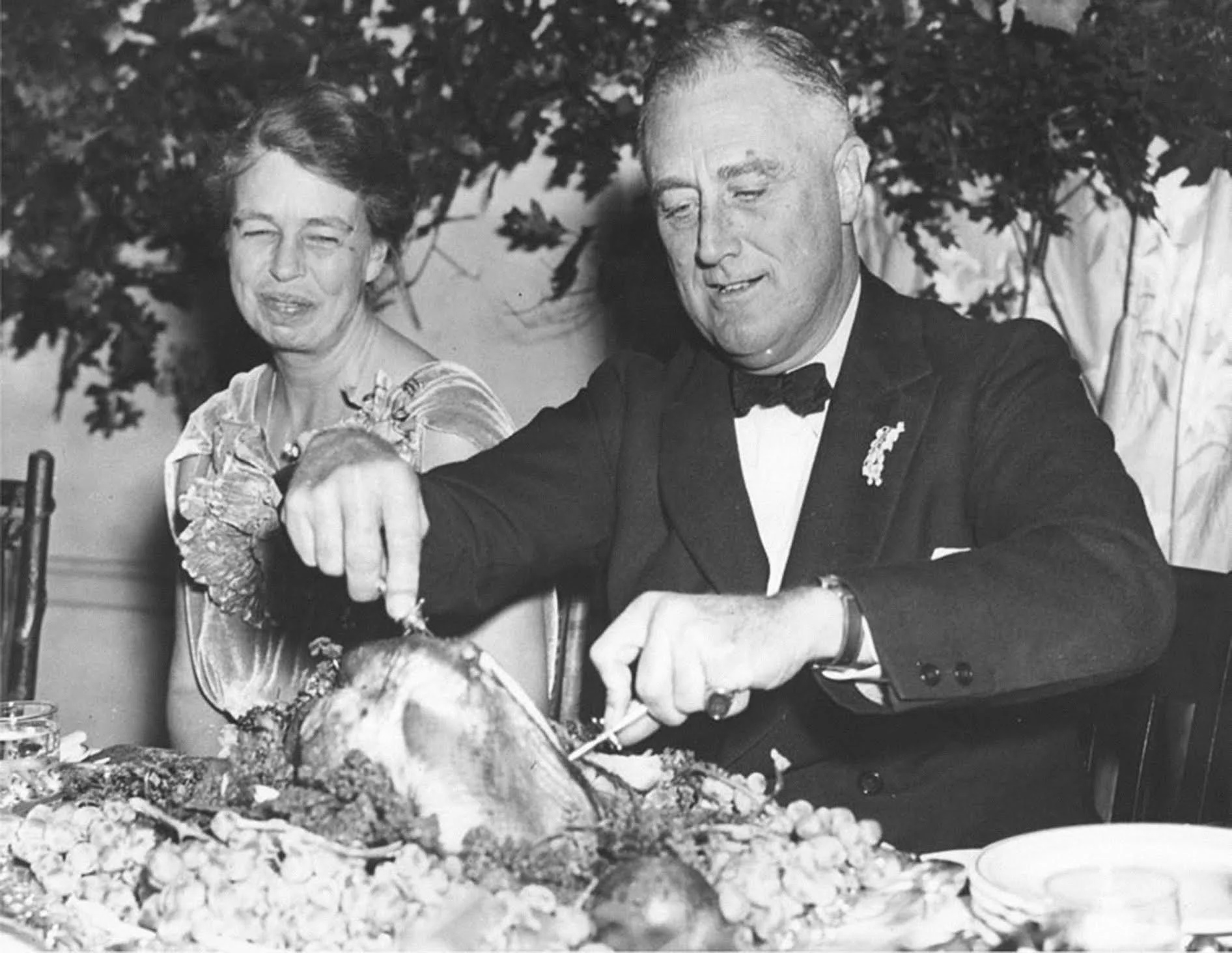
there were five Thursdays in November 1939, which limited the holiday shopping season between Thanksgiving and Christmas to just three weeks. Major retailers urged Roosevelt to shift the date, arguing that a full month would bolster sluggish sales.
On Halloween in 1939, President Franklin Roosevelt issued a proclamation moving Thanksgiving up by one week, from November 30th to the 23rd.
It was a break from tradition. Since the Civil War, Americans had observed Thanksgiving on the final Thursday of the month.
However, there were five Thursdays in November 1939, which limited the holiday shopping season between Thanksgiving and Christmas to just three weeks. Major retailers urged Roosevelt to shift the date, arguing that a full month would bolster sluggish sales.
Americans responded to FDR’s move with confusion and mixed enthusiasm. Dissenters outright mocked the new date as “Franksgiving.”
Twenty-six states ignored Roosevelt’s proclamation, keeping Thanksgiving on November 30. Nineteen states and the District of Columbia followed the president and observed on the 23rd. Texas, Colorado and Mississippi recognized both.
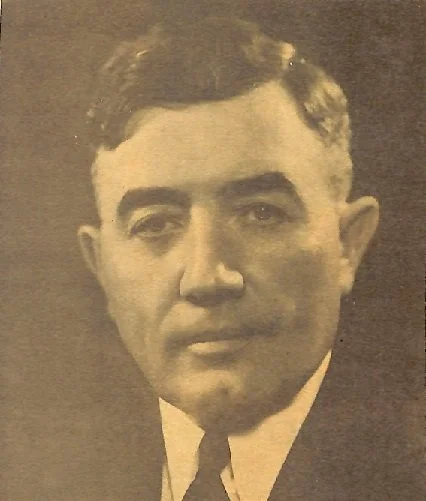
Governor M. Clifford Townsend. Photo courtesy of WikiCommons.
Indiana’s Democratic governor Clifford Townsend supported the President’s effort and moved the holiday accordingly for Hoosiers. In his proclamation, Townsend declared: “in our Thanksgiving we should not forget that both at home and abroad there are many in need or suffering from the effects of war.”
Towsend’s plea reflected a nation recovering from depression and a world in turmoil. U.S. entry into the Second World War was two years out in fall of 1939, but fighting was already underway in Europe and East Asia. Japan had spent much of the 1930s invading China. In September, Germany and the Soviet Union jointly seized Poland, plunging Europe back into another catastrophic war.
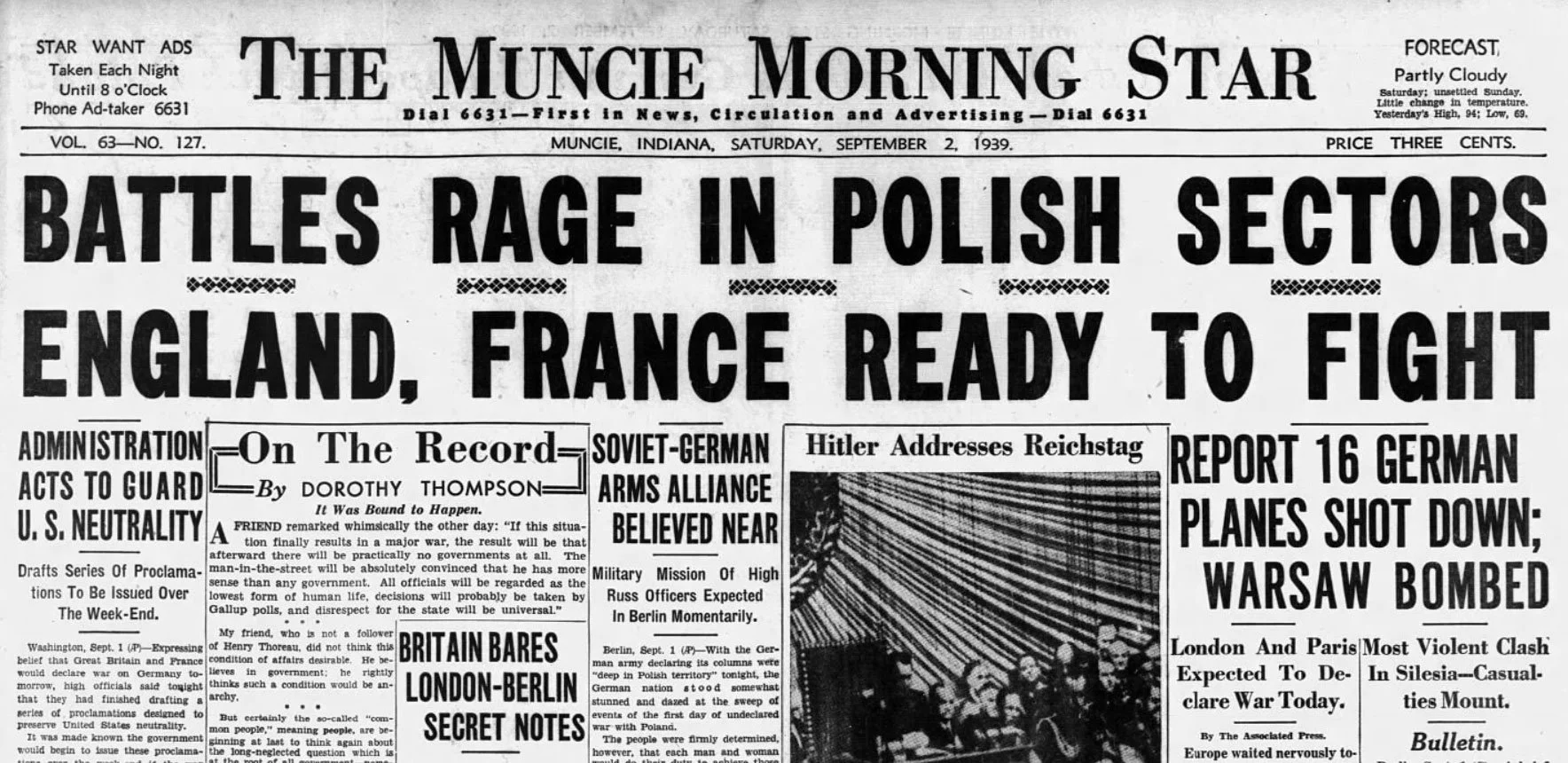
Muncie Morning Star from September 2, 1939.
The United States was officially neutral in November 1939. But three weeks before Franksgiving, Congress modified the Neutrality Act to allow for cash-and-carry. The new law permitted belligerents like France and the United Kingdom to buy American arms and munitions, as long as they paid in cash and transported the weapons themselves back across the u-boat infested North Atlantic.
The war was on everyone’s mind.
Most Americans, including Munsonians, were thankful that our nation wasn’t involved. Gallup polls at the time showed vehement opposition to another European war.
Too many remembered the horrors from the last one. The Great Depression had also turned public attention inward to the homeland and away from costly foreign entanglements.
On Franksgiving Eve, the Evening Press asked Munsonians what they were most thankful for that year. Ora Norton of Streeter Avenue was grateful for “good crops and that we are not in a European War.” June Nolan of Riverside City was thankful to “live in a country where there is peace at all times.” The sentiment was echoed by Harriet Newlee of the Old West End who offered “thanks that we are not at war.”
Some locals were moved by the violence and assisted in the relief effort. The Evening Press reported that 70 Munsonians had volunteered to knit sweaters for Polish refugees. The effort was coordinated by Sarah Carson, the chairperson of Delaware County’s Red Cross.
Munsonians were also thankful for a recovering economy and counted their blessings. Local employment in late 1939, the Press reported, was the highest it had been in two years. Ball State Teacher’s College posted record enrollment.
The city was also finishing up work on the new sewage treatment plant, which, once opened, would drastically improve Muncie’s sanitation.
Out in the county, farmers had just finished harvesting a record corn crop that fall, with an average yield of “60 bushels per acre…an estimated 2.2 million bushels of corn” total.
As for the holiday itself, most Munsonians celebrated in the usual ways. The Star wrote that “all Muncie, with the exception of a multitude of turkeys, chickens, ducks and geese, rejoiced in the observance.”
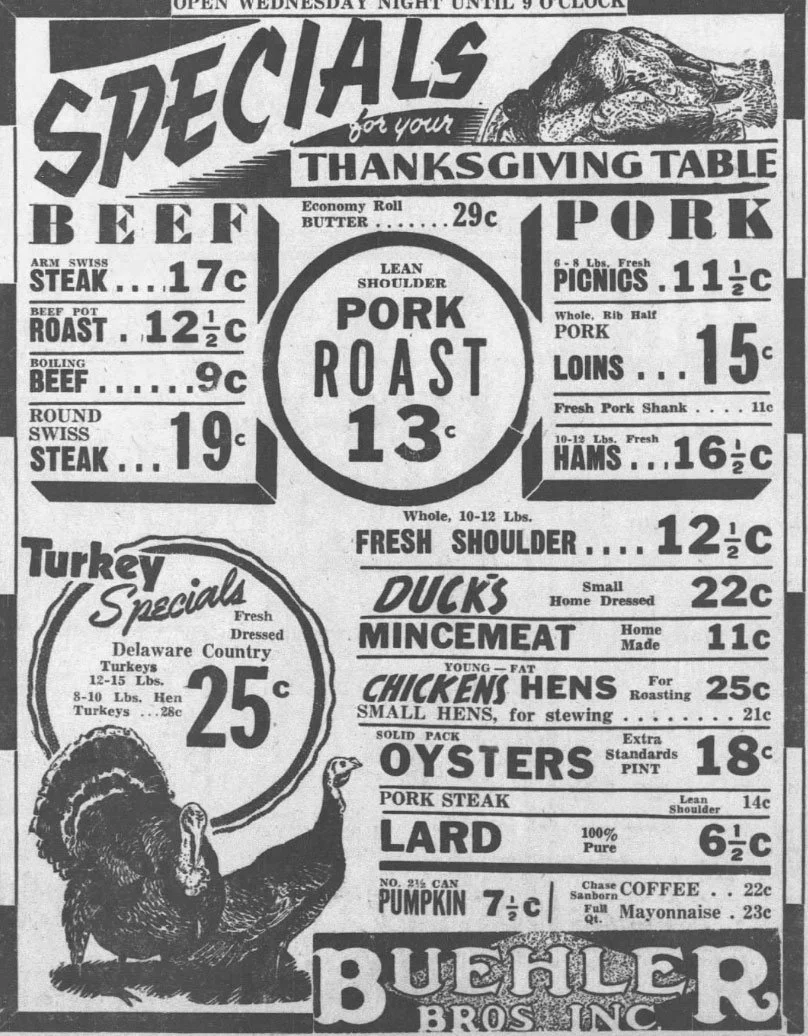
Buehler Bros. ad from the Muncie Evening Press, November 21, 1939.
Buehler Brothers on South Walnut sold 15-pound turkeys for $3.75, ducks for 22¢ a pound and 10-pound pork butts for $1.80. Chesapeake Bay oysters were selling for 19¢ a pint over at University Food Mart in the Village, while cans of pureed pumpkin went for 25¢ at the Park & Shop on Muncie’s south side.
For those eating out, the Polly Parrot restaurant at 103 E. Jackson, “the dining room for discriminating people,” offered a full Thanksgiving spread for 75¢ a person. For the same amount at Payne’s Cafe on East Main, diners could enjoy roast turkey with oyster dressing, salad, fresh fruit and fried chicken.
The Star also wrote about Munsonians turning out for their needy neighbors. Thirty bushel baskets of food were distributed to food insecure families, courtesy of Muncie’s American Legion Auxiliary. The initiative was coordinated by Elizabeth Ball, Burris School and Riggin Dairy.

Delaware County Infirmary. Image: Delaware County Historical Society, Mike Mavis Collection
Over at the Delaware County Infirmary, 165 persons dined on roast chicken, oyster stuffing and pumpkin pies—courtesy of the Muncie Ministerial Association. Ninety-four kids at the Children’s Home sat for a Franksgiving meal of roast chicken with “all the trimmings.” Even at the Delaware County Jail, about 20 prisoners enjoyed a meal of roast goose, mashed potatoes and pumpkin pie.
The city’s movie houses were packed that afternoon. The Rivoli screened the drama “Dust Be My Destiny,” while “Two Bright Boys” played over at the Wysor Grand. Bing Crosby starred in “East Side of Heaven” at the Vaudelle. Liberty Theater played “Wuthering Heights,” starring Laurence Olivier and Merle Oberon.
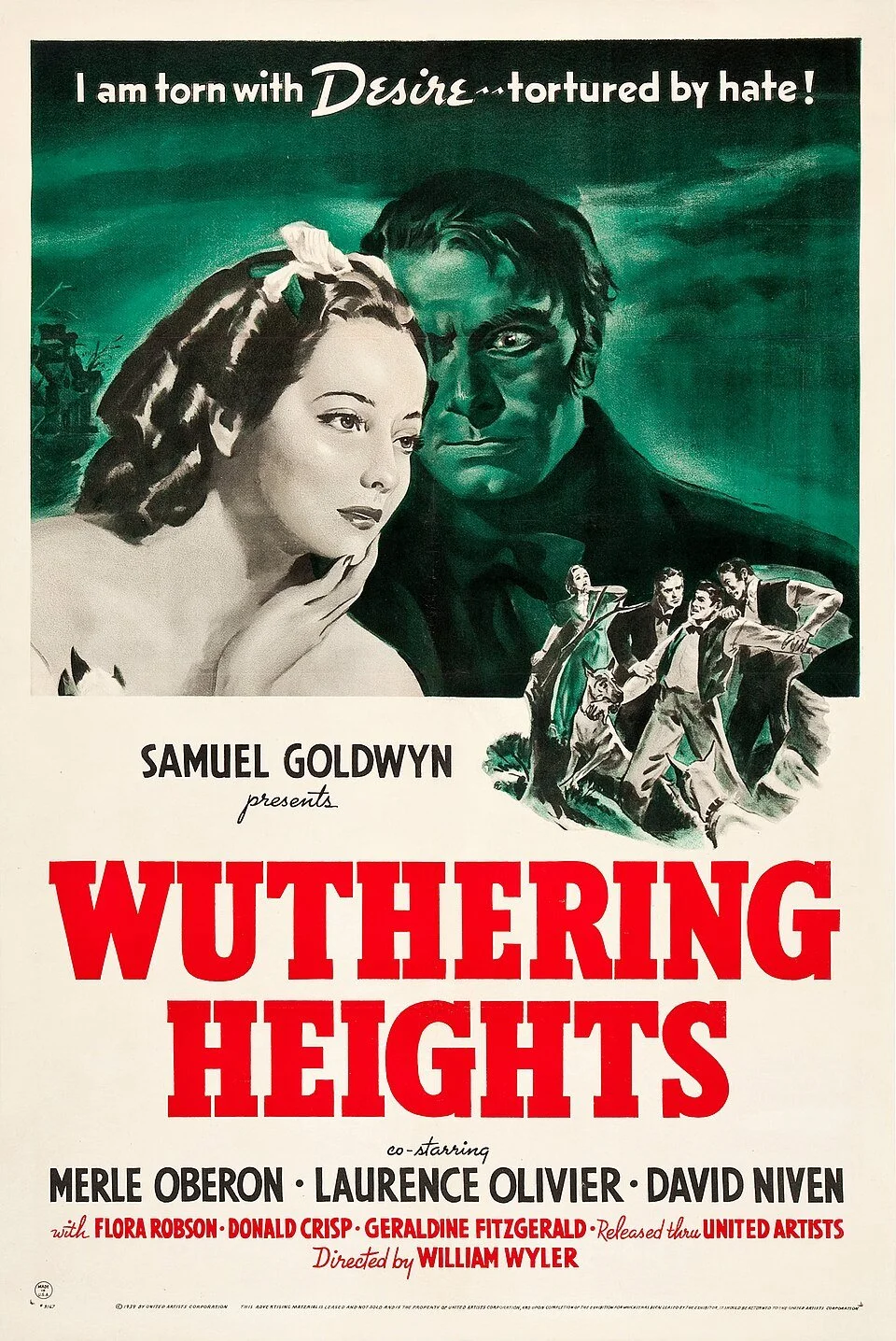
Wuthering Heights poster from 1939. Image: Wikimedia Commons
In the evening, hundreds of Munsonian teenagers crammed the ballroom at Hotel Roberts for a Thanksgiving Dance thrown by Delta Theta Tau sorority. Music was performed by the Clyde Track Orchestra.
Then as now, retailers offered holiday sales the day after Thanksgiving. Most importantly for young Munsonians, Toy Land opened at Ball Stores downtown, a perennial favorite.
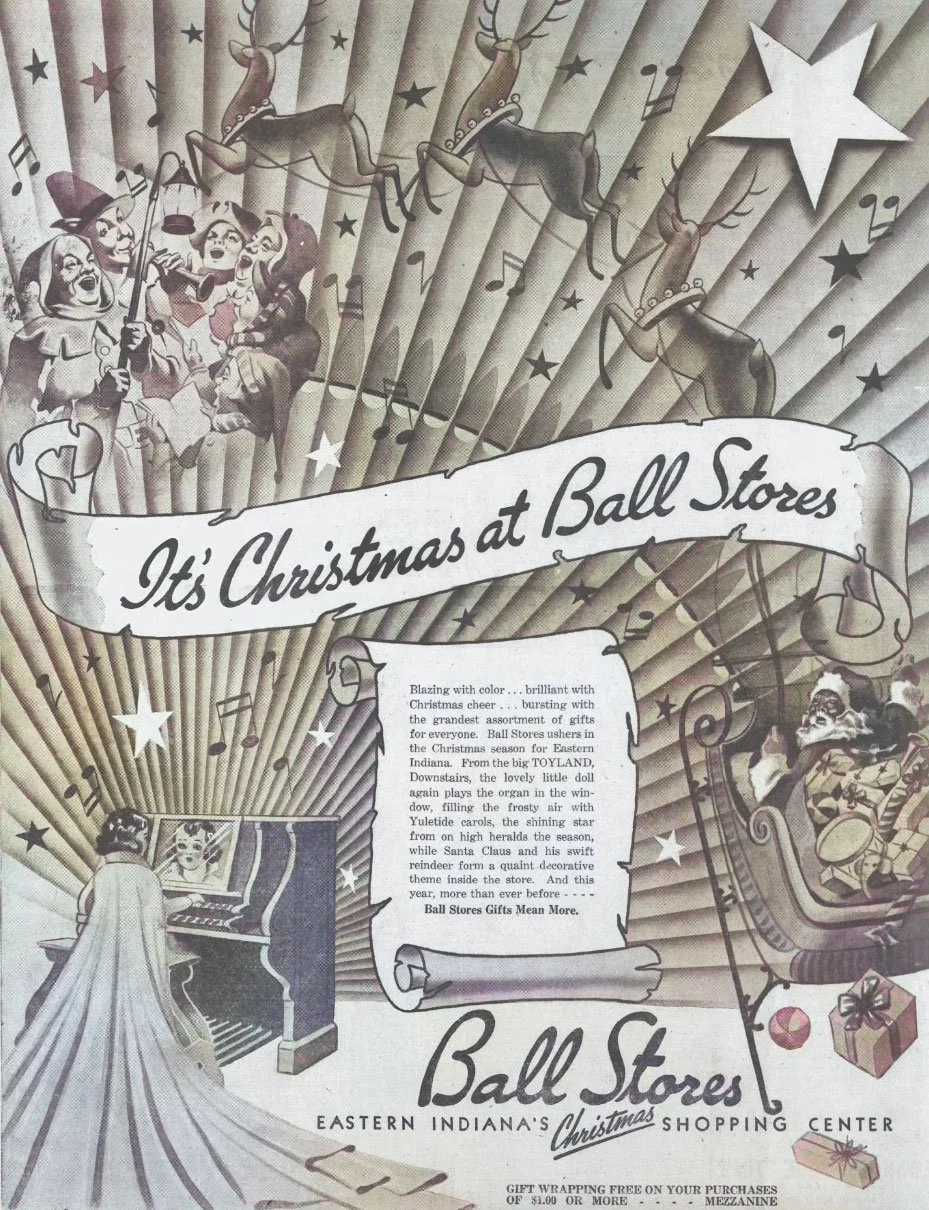
Colorized Ball Stores’ Toyland ad from the Muncie Morning Star, November 23, 1939
Franksgiving lasted only three years. In 1941, the U.S. Department of Commerce did a study to see if the extended shopping season meaningfully increased holiday sales. It didn’t.
Late that year, just weeks after Pearl Harbor, Congress set Thanksgiving permanently on the fourth Thursday of November. Roosevelt signed the measure into law the day after Christmas, fixing the holiday for all time.
Happy Thanksgiving!