
A Munsonian New Years, 1900
By: Chris Flook
Contrary to commonly held assumptions, the 21st century began not on January 1, 2000 but a year later on January 1, 2001.
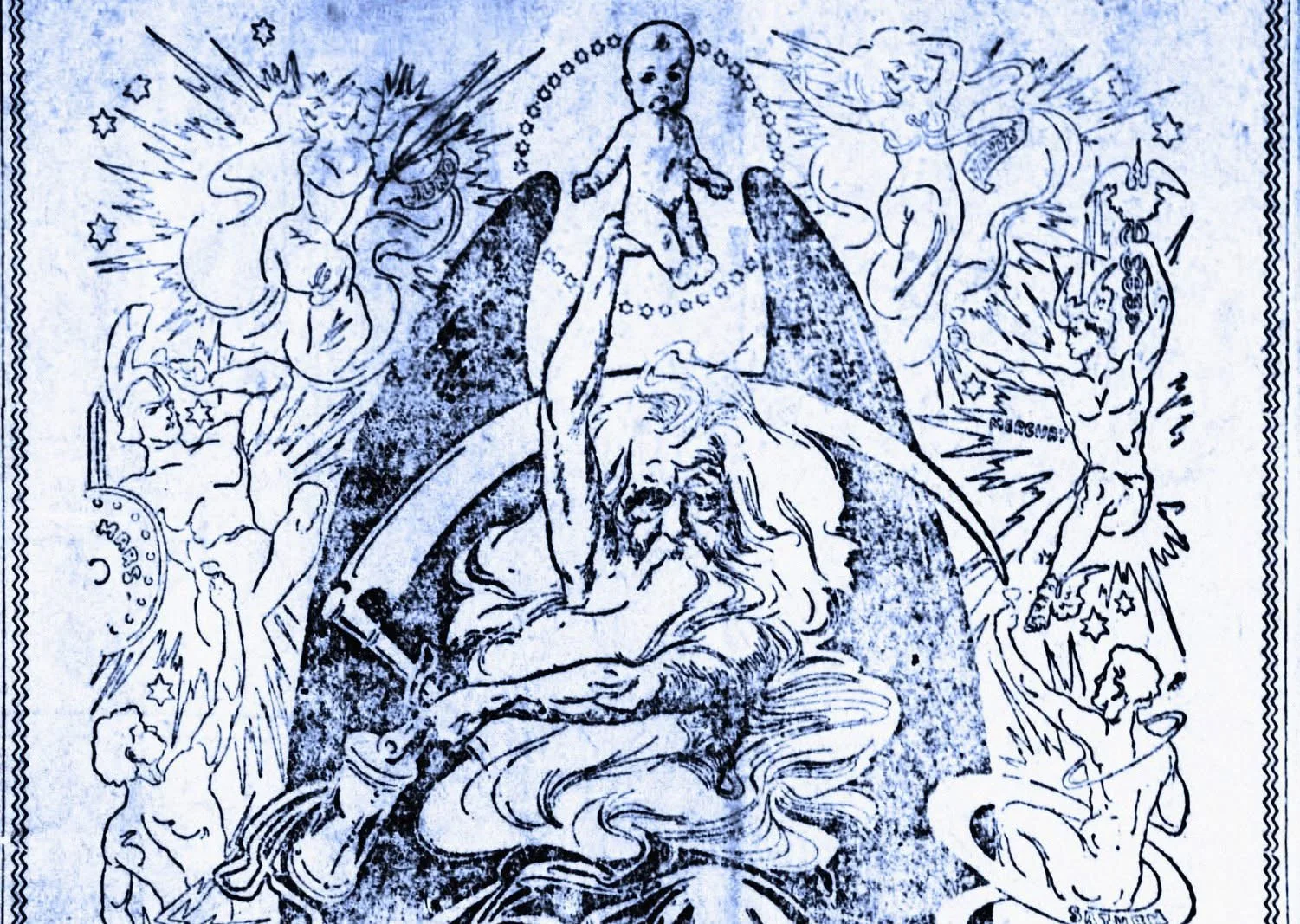
Father Time, Muncie Morning Star, 1901.
In fact, all decades, centuries and millennia begin on the ones—1901 began the 20th century and 2001 began the Aughts, the 21st century and the third millennium of our common era. The dating system we use today was first devised by a Scythian monk named Dionysius Exiguus in 525 AD. Exiguus didn’t use 0 and began the count of years at 1.

Dionysius Exiguus, WikiMedia Commons.
In the Gregorian calendar we follow, January 1 marks the New Year. This tradition in the West dates back to the Roman Republic. The Roman new year began when elected consuls, Rome’s chief executive magistrates, began their one-year terms on the Kalends of January—the first of the month.
On the Kalends of January in 1900, the Muncie Morning Star reported that “with the advent of the new year came the discussion on the questions of the dawn of another century.” Across Muncie, “where informal gatherings were held, there were warm arguments on the subject. Some said the twentieth century is here, while others asserted that another year must lapse.”
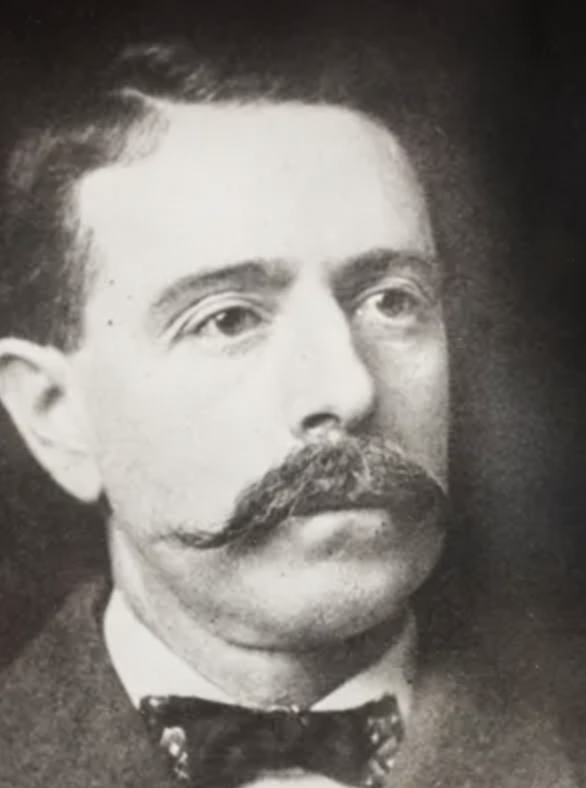
Edward Tuhey, WikiMedia Commons
A reporter even asked Mayor Edward Tuhey his thoughts. Muncie’s chief magistrate replied, “my first impression is that the new century begins tonight.”
The celebration in 1899 was a tepid affair downtown. The Muncie Star wrote the next day that “except for the one or two policemen and a solitary cab, the streets were practically deserted.” At midnight, downtown residents heard the tower bells at High Street Church and Muncie Central mark “that Father Time had added another complete mile to his cyclometer.”
Then as now, gunpowder heralded the arrival of a new annum. The Morning News reported that, at midnight, “all the members of the police force on duty turned loose their bull-dog revolvers and each barked to the full extent of its ability, five rounds being fired into the air.”
Thankfully, wiser heads prevailed over at the Muncie Fire Department. The MFD decided not to ring fire bells at midnight, nor bang anvils, “as has been the custom in years past.”
The subdued 1899 New Year’s Eve may have been due to the weather. Bitter cold temperatures settled over Muncie in late December, forcing everyone indoors. “Good thermometers in Riverside and Congerville,” the Muncie Daily Times reported on New Year’s Day, show it’s “been as cold as five or six below.”
The Morning News reported that Munsonians “are suffering from the intensely cold weather. The pressure of gas in many homes is decidedly low.” During the early gas boom of the 1890s, many houses were built with or converted to natural gas for heat. The era’s pipeline infrastructure didn’t work well in frigid temps.
Muncie’s suburbs were hit hardest. Whitely, Normal City, Riverside, Congerville Avondale and Industry “have been more or less affected by a lack of fuel,” the News wrote. The paper quoted a resident: “there is untold suffering in Muncie, not only from a shortage of gas, but there are lots of people who have neither food nor fire.”
The news wasn’t all bad, however. The Star wrote that hundreds of Munsonians were “taking advantage of the excellent (ice) skating on White River.” Each afternoon between Christmas and New Year’s, crowds of skaters flocked to the frozen river near the Jackson Street Pike bridge “and on a stretch of ice in front of McCulloch Boulevard.”
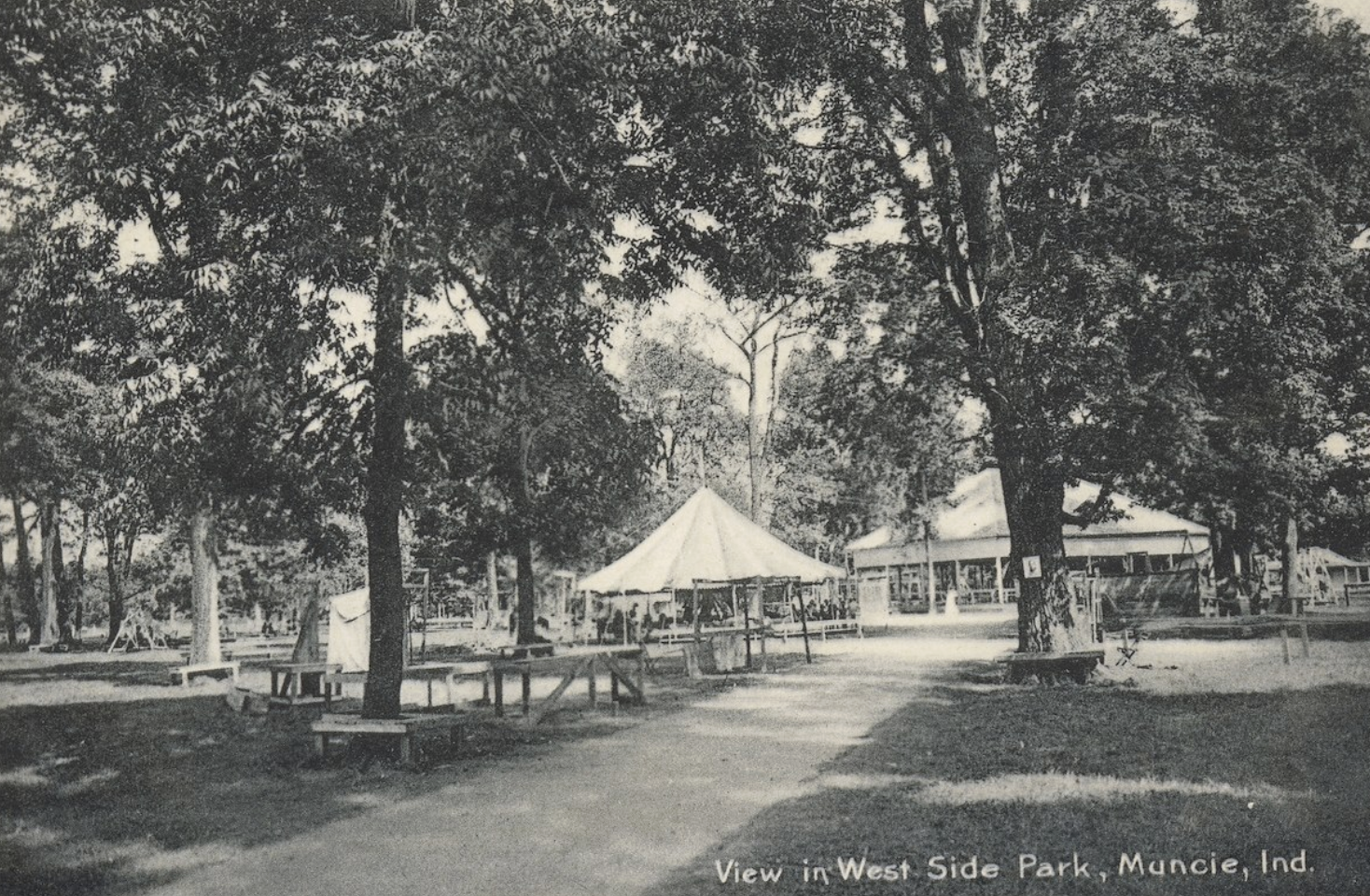
West Side Park, circa 1900. Image: Delaware County Historical Society, Mike Mavis Collection.
On New Year’s Day, Munsonians packed the skating rink in Westside Park to watch Muncie’s Wachtell Royals take on the Racine, Wisconsin Lakesides in roller polo. “Fully 800 people, all polo enthusiasts, saw the game Monday night,” the Star wrote. The Royals won 4-1.
Downtown Muncie was quiet, save for two New Year’s Eve galas. Hundreds of Munsonians attended a grand ball at Shirk’s Hall, 114 East Jackson Street. The Star reported that “150 couples were in the grand march, while several hundred more were spectators.”
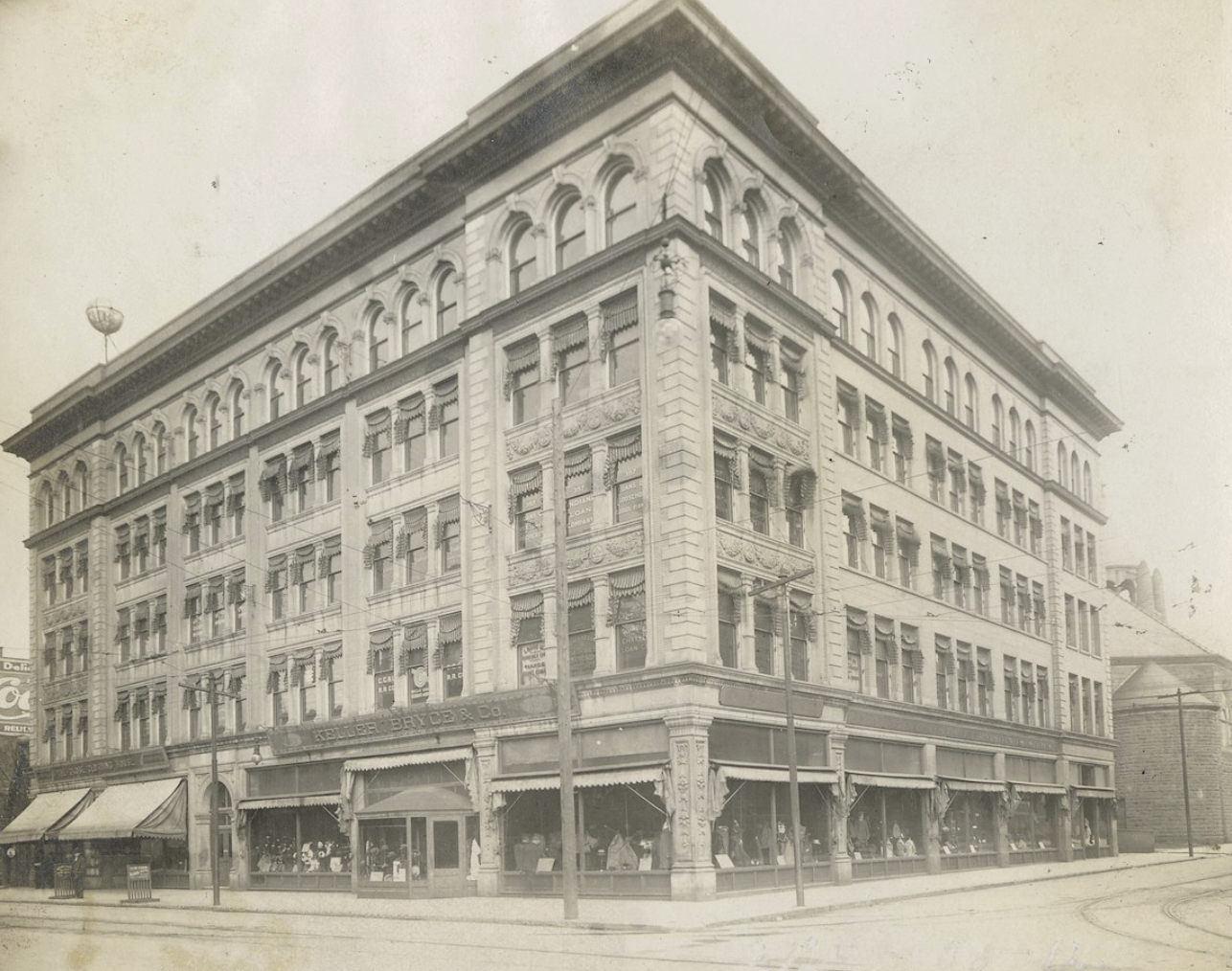
Johnson Building, circa 1900. Image: Delaware County Historical Society, Mike Mavis Collection.
The Muncie Commandery No. 18 of the Knights Templar threw an epic New Year’s party in the Johnson Building, located at the northeast corner of Charles and Walnut streets. The Morning News gushed over the party, describing it as “a most brilliant function, being the initial ultra-fashionable event of the new year.”
—-
The original version of this article was published in the Journal and Courier. Read it here.