
Wysor Grand Opera House Collection
By: Chris Flook
The Delaware County Historical Society has debuted an online photo exhibit featuring The Wysor Grand Opera House Collection. The photos depict actors, singers, comedians, acrobats and vaudevillians who performed at the Wysor Grand Opera House theater during the gas boom (1886-1910).
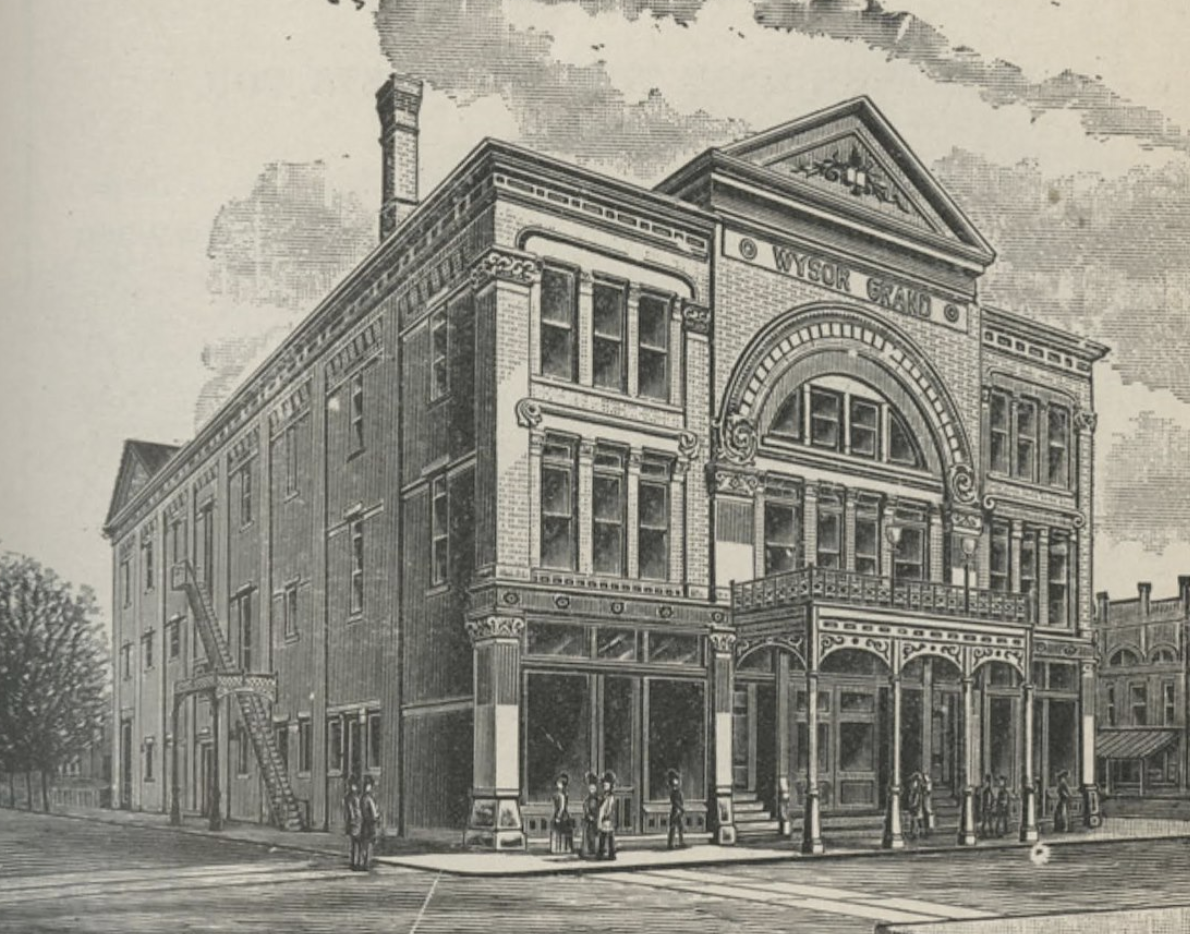
Wysor Grand Opera House, Delaware County Historical Society
Cabinet cards were a popular form of 19th-century portrait photography, something like oversized baseball cards for stage performers and public figures. Photos were printed, mounted on cardboard and sent to theaters in advance of shows as part of promotional packages. Cards were often pinned on placards and displayed outside theater entrances.
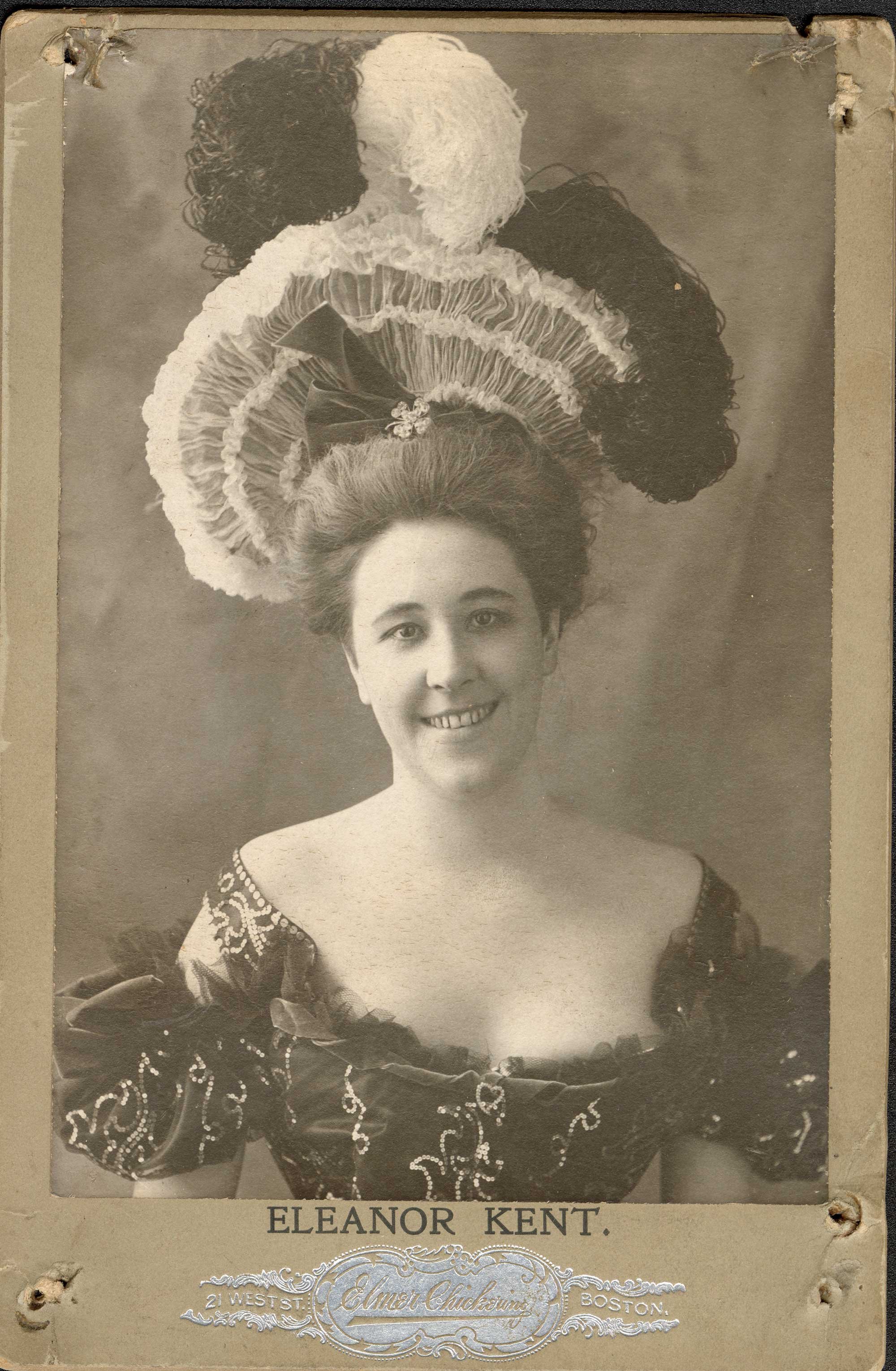
Eleanor Kent, DCHS: Wysor Grand Opera House Collection
The photos here date mostly from the late 19th and early 20th centuries, when variety performers traveled across the United States by rail, headlining plays, vaudeville acts, comedies, musical theater, melodramas and lectures at opera houses across the United States.
About the Collection
Muncie Civic Theatre partnered with the Delaware County Historical Society in 2024 to digitize and share the collection. The cabinet cards were found at Muncie Civic, located in the historic Boyce Block.
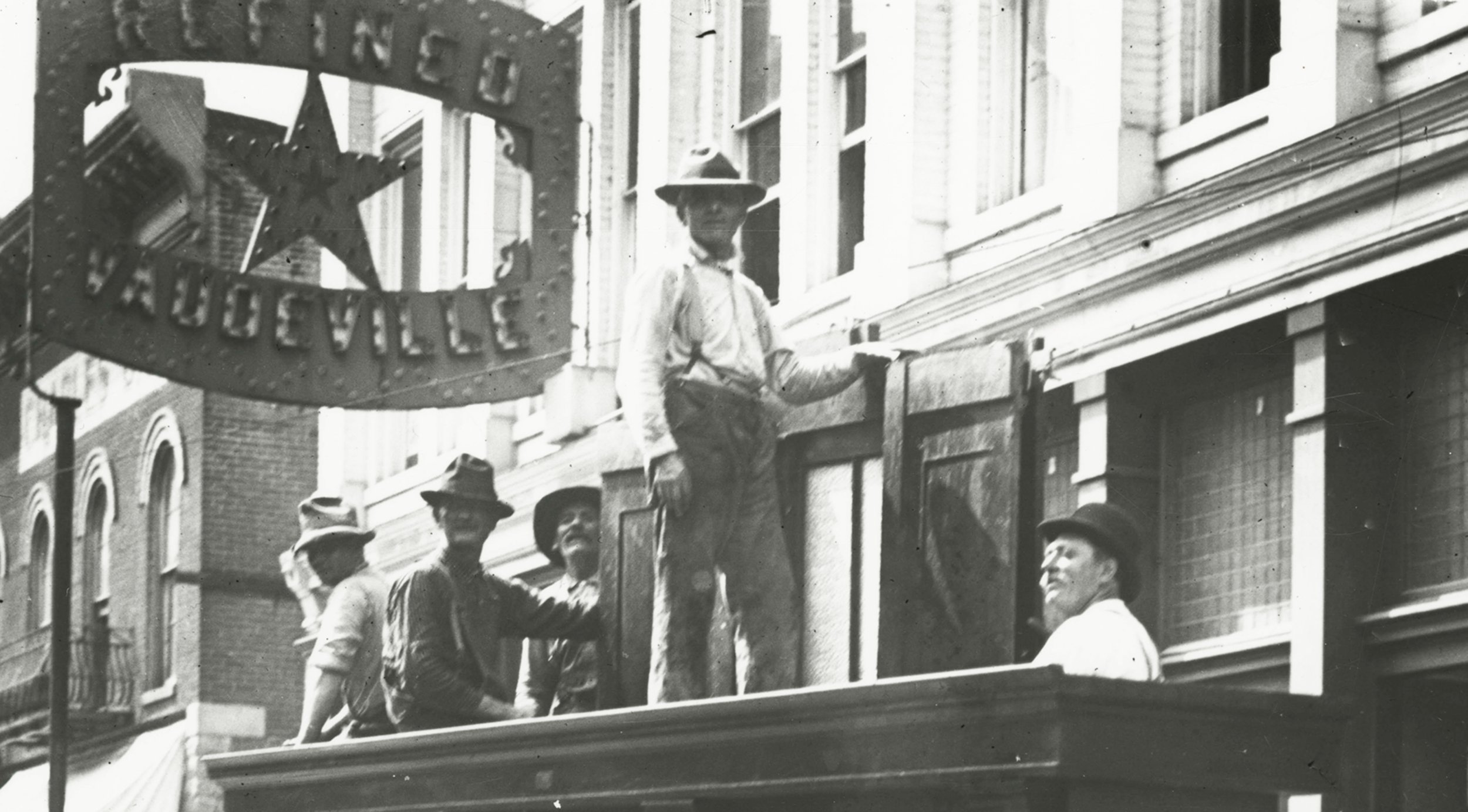
Star Theatre, 1920s. Ball State’s Bracken Archives.
At first, we thought the cards depicted performers at Star Theatre, a vaudeville house that once existed in Civic’s space in the Boyce Block during the early 20th century. The Star opened in 1904 to stage “refined vaudeville” in downtown Muncie.
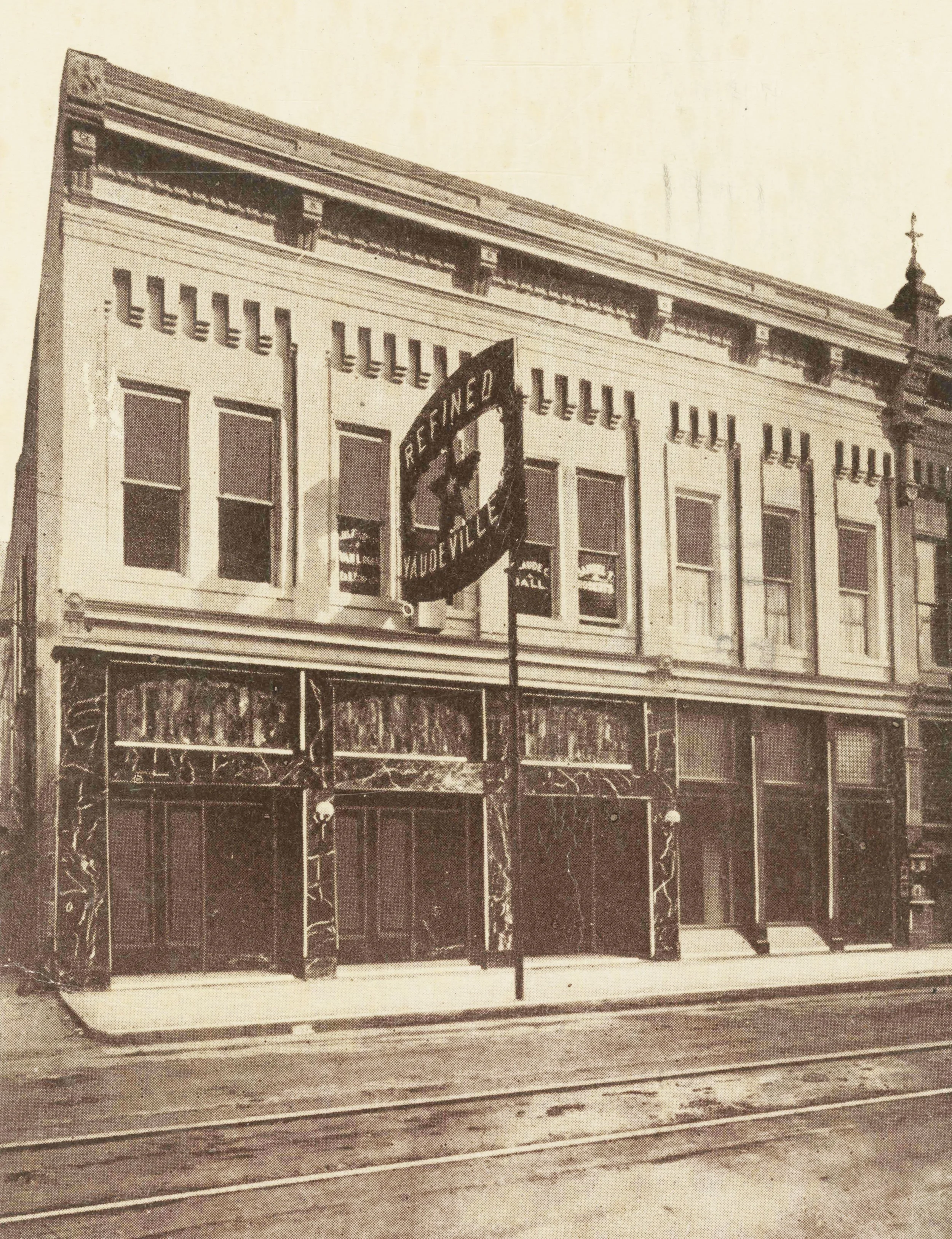
Star Theatre, 1906. Ball State’s Bracken Archives.
The Star closed during the Great Depression when vaudeville declined in popularity. In 1935, Theatrical Managers leased the space and reopened it as the Hoosier Theater, a movie house.
Muncie Civic was founded in 1931 as a community theater. Civic’s performances were first staged in the Edmund B. Burke Ball Auditorium at the Masonic Temple (now, Cornerstone Center for the Arts). Civic moved into the Boyce Block in the 1960s, a few years after Hoosier Theater closed.
The society scanned the cards and conducted research for each performer. We specifically looked for when each actor came to Muncie and where they performed.
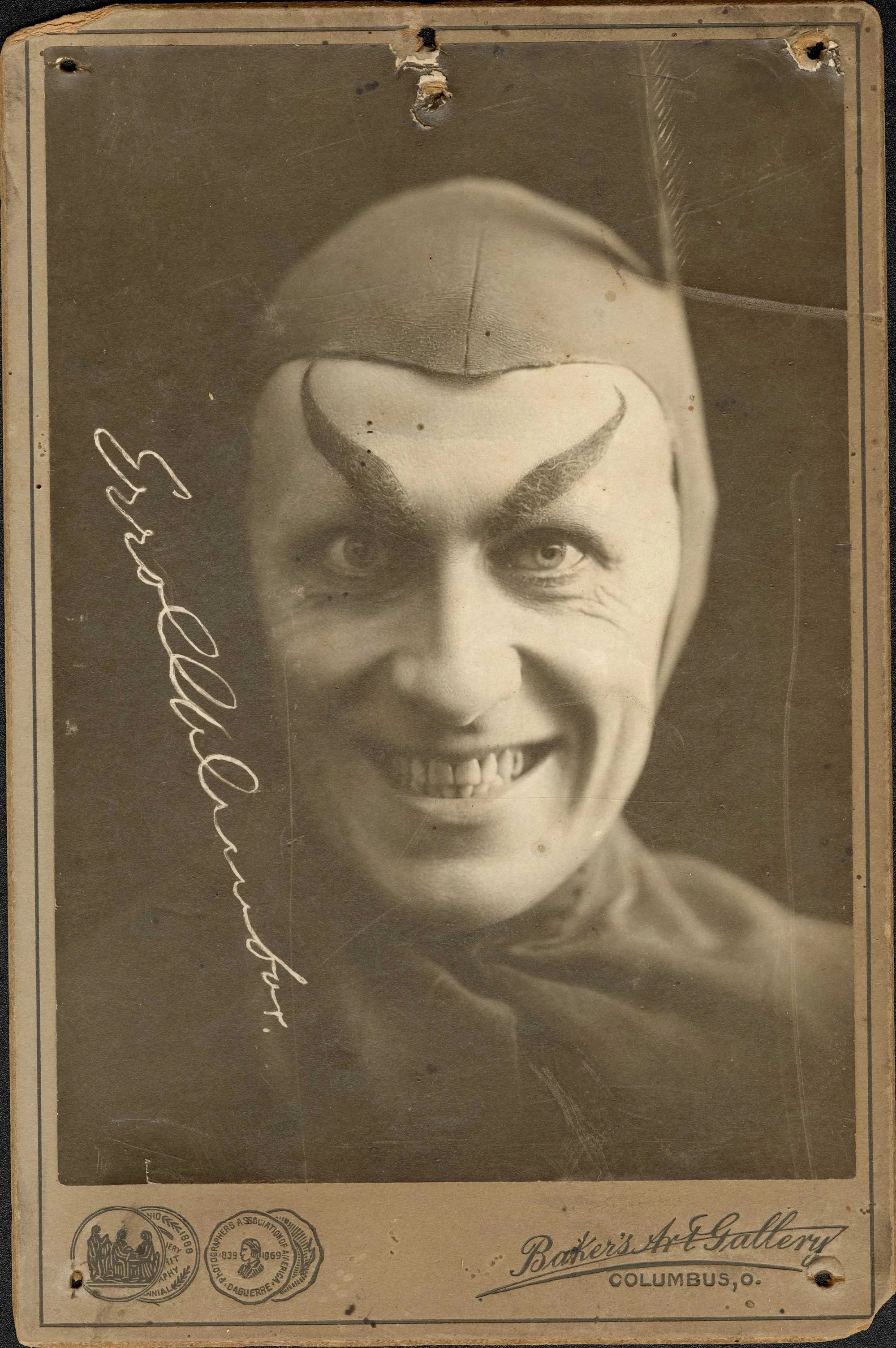
Erroll Dunbar. DCHS Wysor Grand Opera House Collection
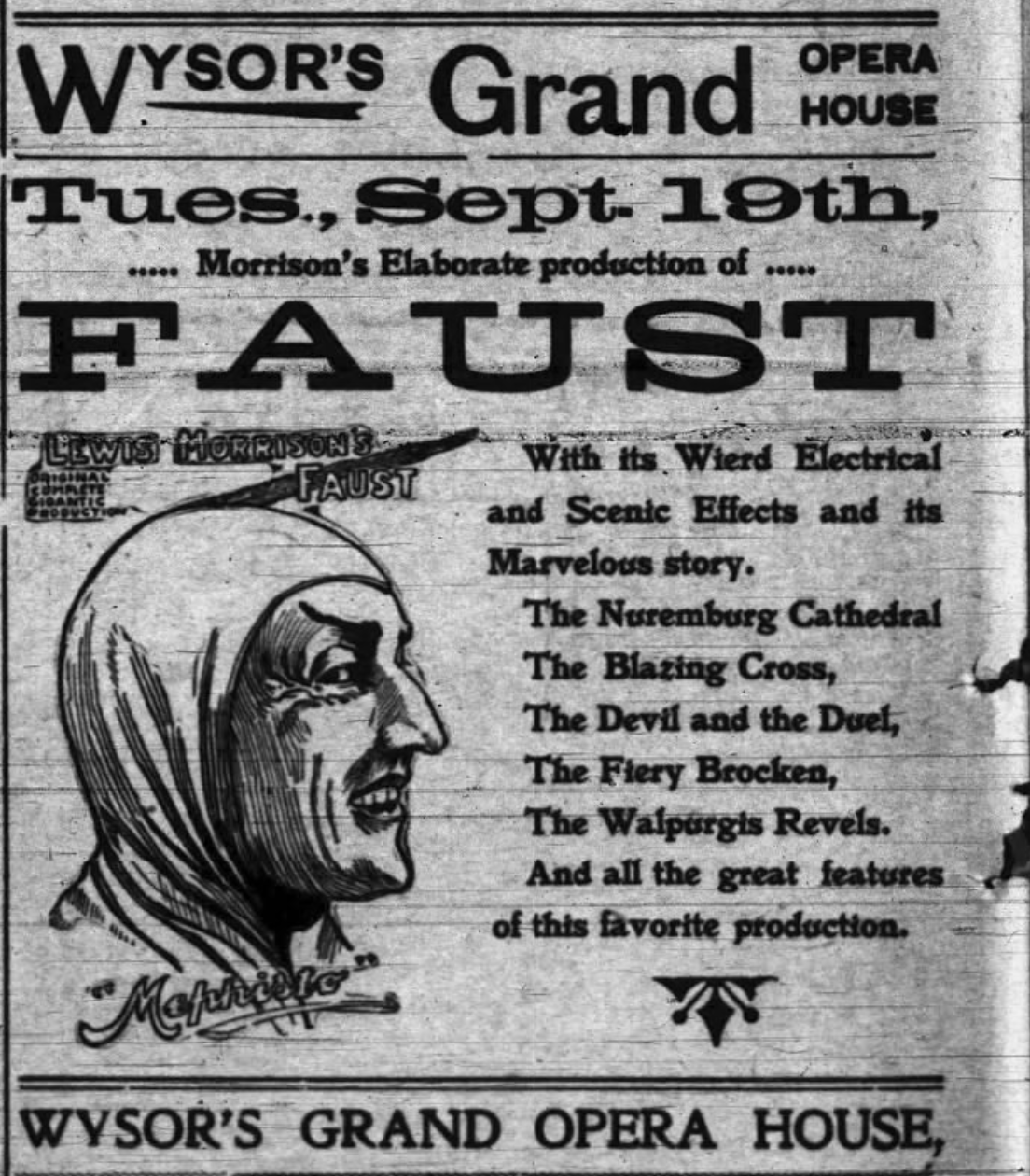
Faust, performed at the Wysor Grand on 9.19.1899 with Erroll Dunbar as Mephistopheles.
There are about 80 cards, featuring 70 performers total. It's likely that all 70 played on Muncie stages, but we only found records for 55 performances.
All 55 performers appeared at the Wysor Grand Opera House, at the corner of Mulberry and Jackson streets. Five also had performed earlier at the older Wysor Opera House on Main Street. Only four actors shown in the cards appeared at Star Theatre. A few others returned to Muncie on the big screen, when films featuring them played at the Rivoli, Columbia, Orpheum and Lyric movie theaters.
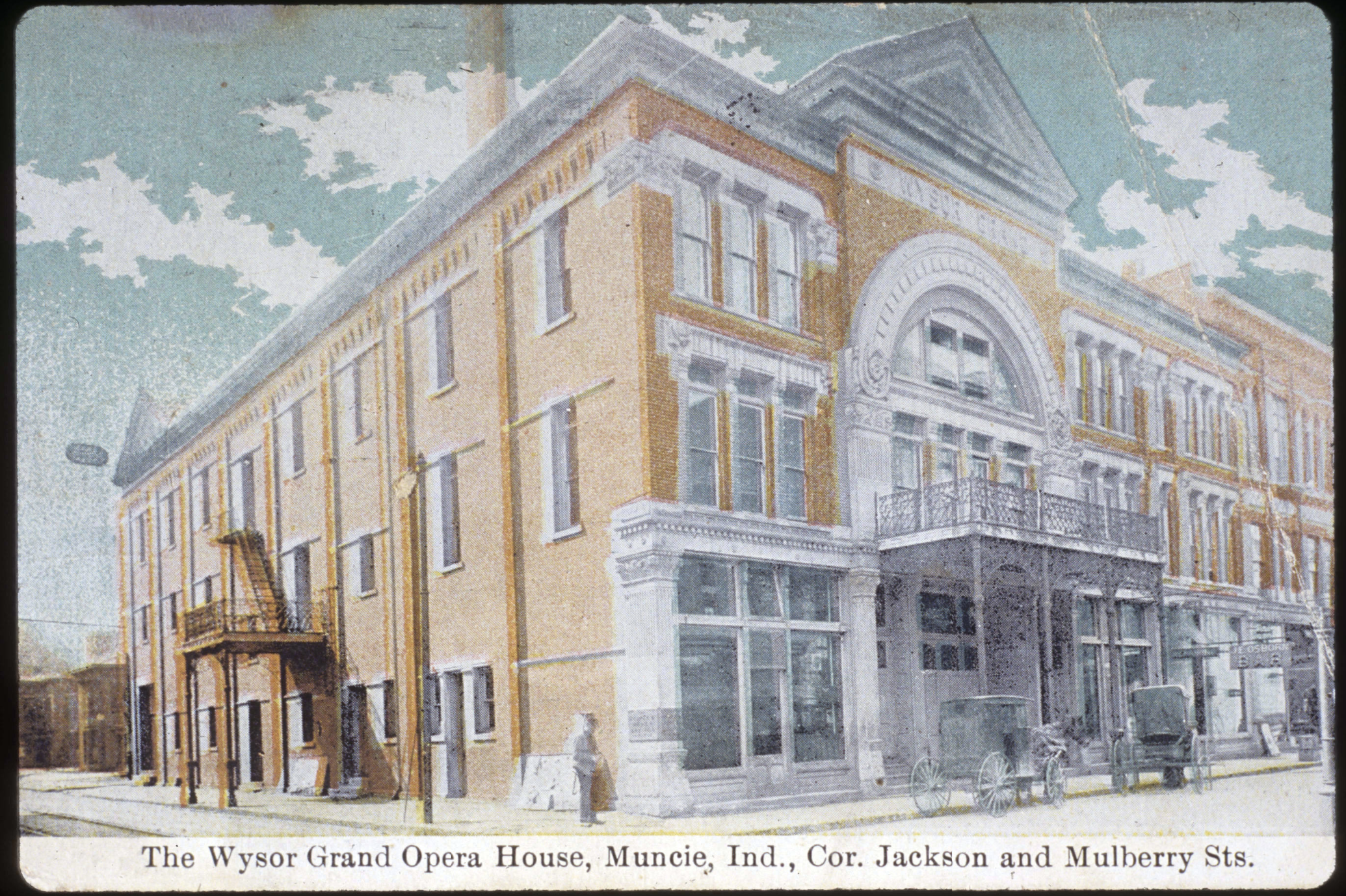
Wysor Grand Opera House
The Wysor Grand Opera House
The Wysor Grand Opera House opened in 1892 at the southwest corner of Jackson and Mulberry streets. The theater was built by Jacob Wysor and managed by his son, Harry Wysor. The Grand was the Wysors’ second theater in Muncie.
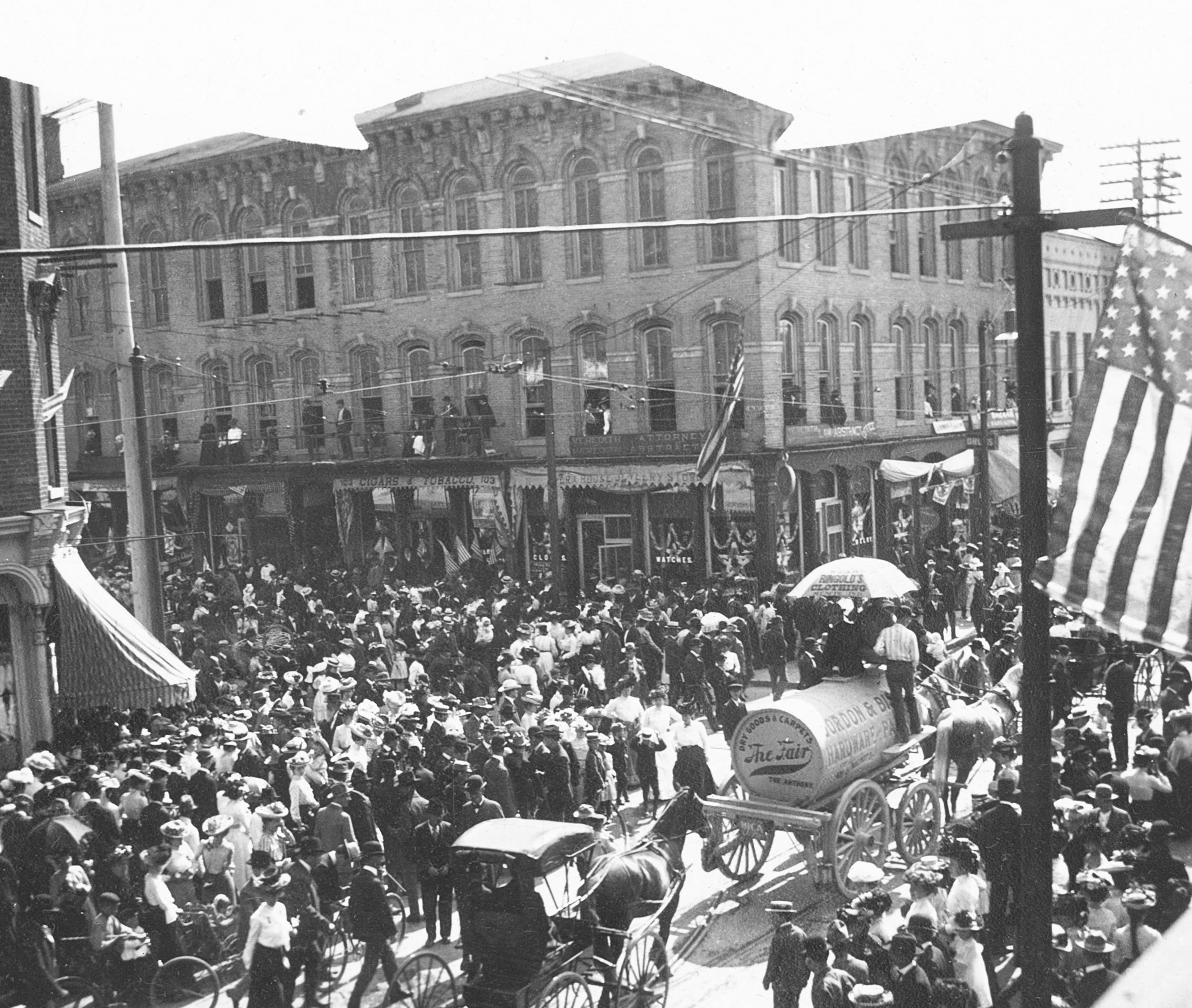
Original Wysor Opera House, southwest corner of Main and Jackson. Delaware County Historical Society, Mike Mavis Collection
Jacob Wysor had built his original opera house in 1872, located at the southwest corner of Main and Walnut streets. The theater was on the second floor and hosted lectures, religious services, touring performers, plays, operas and speakers like Frederick Douglass.
The Wysor Grand was larger and more modern, with electric lights, ornate decoration, private boxes and seating initially for about 1,400 people. The first show was a play, Richard III, starring Shakespearean actor Thomas Keene. On opening night, Keene praised the Wysor Grand as one of the finest theaters he had ever performed in.
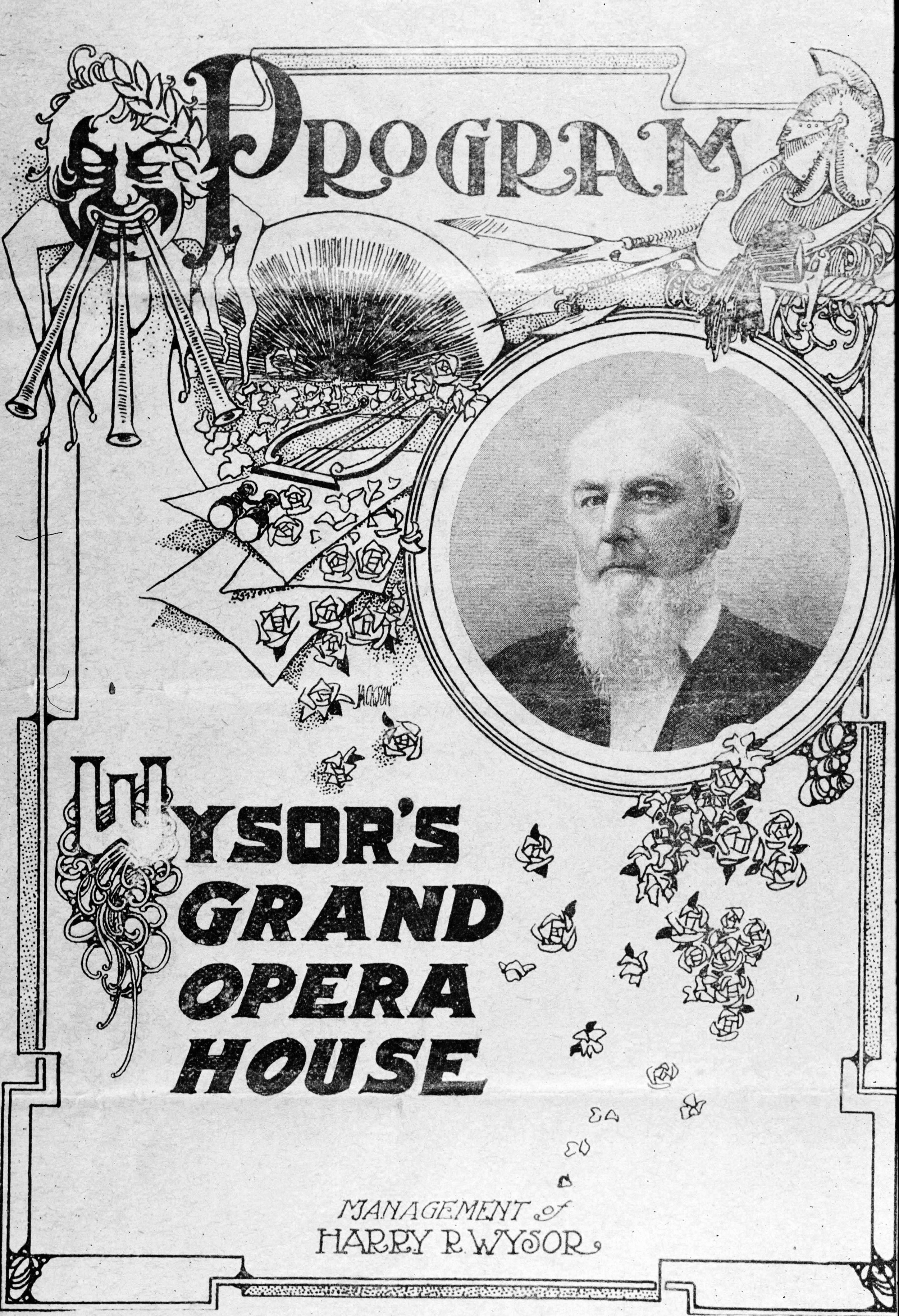
Wysor Opera House Program. Ball State’s Bracken Archive
The Wysor Grand hosted melodrama, opera, comedy, vaudeville, musical theater, burlesque and minstrel shows, and motion pictures. It closed in 1963 and was demolished.
Ongoing Projects
The Wysor Grand Opera House Collection is part of a multi-year historical society project, in partnership with Muncie Civic Theatre and Ball State University’s Center for Emerging Media Design and Development.
Online Exhibit
The online exhibit is available here at the historical society’s online collections portal: https://delawarecountyhistory.catalogaccess.com/exhibits/12
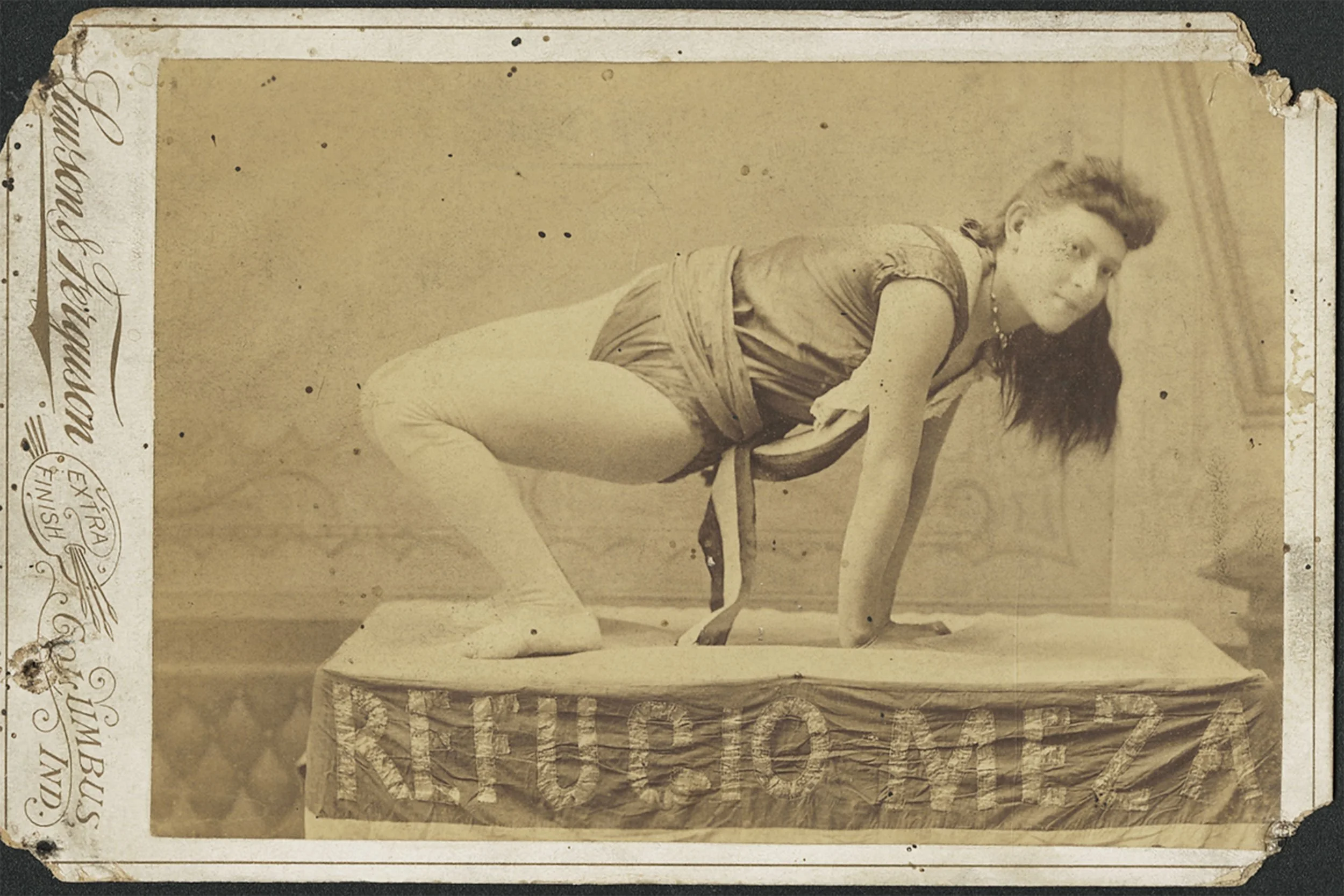
Refugia Meza, DCHS: Wysor Grand Opera House Collection